If your bass drum is constantly creeping forward as you’re playing, KickBlock is the answer to your prayers. We’ve just tested and reviewed it in full.
KickBlock acts like a shock absorbing “wall” for your bass drum. Place it on the carpet in front of the drum, and it locks in place via strong Velcro to ensure your kick drum doesn’t move an inch.
Overall these things are excellent – they do exactly what they say (especially for your floor tom). If you’re struggling with getting a decent sustain, deeper tone, or just having a hard time tuning, BootyShakers are worth checking out.
The TD-17KVX is loaded with great features, including all-mesh drum pads, a super-realistic hi-hat system, and an extra crash cymbal. It’s also great if you’re worried about making too much noise: The mesh pads, the quiet kick drum pad, and the cymbal design all help to reduce the volume when you’re playing it.
We also compare the other kits in the TD-17 line, so you know exactly which one to buy if you’re shopping for an electronic drum kit like this.
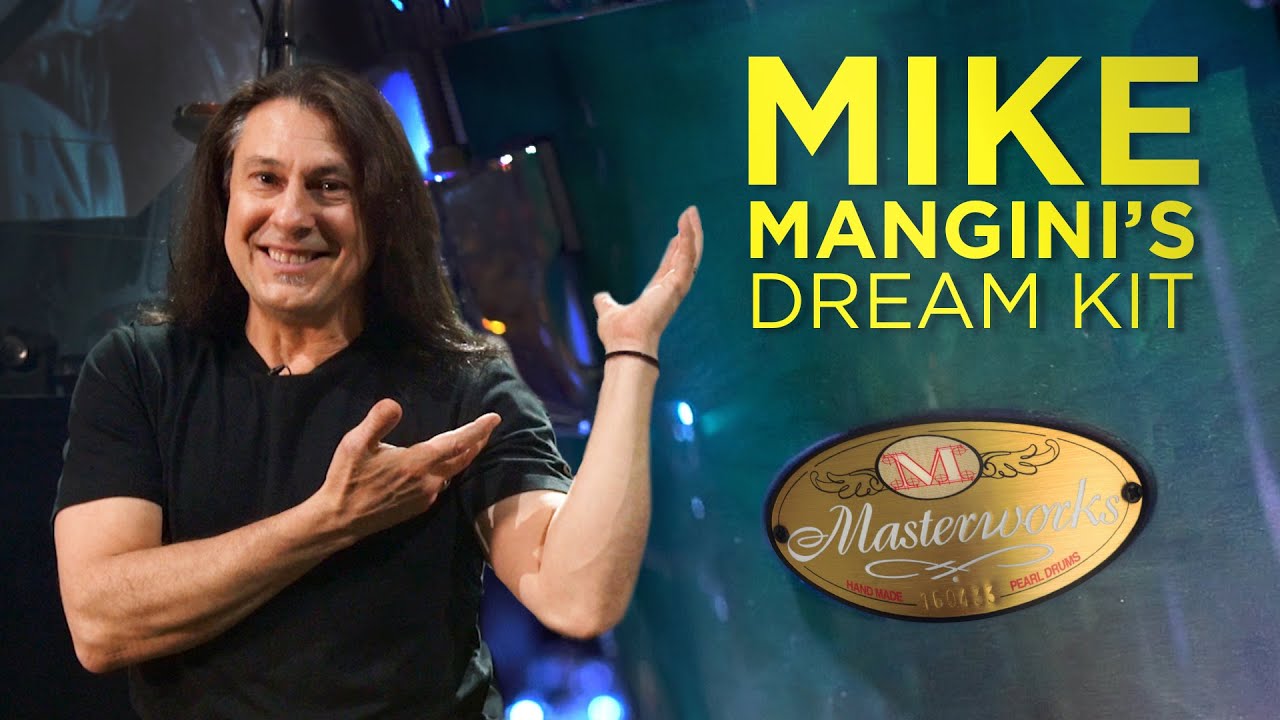
Dream Theater’s Mike Mangini has just posted a video covering his brand new Pearl Masterworks drum kit (scroll to the bottom to see it)!
He talks about how he’s made the switch from birch to maple for the first time, to get an “extra level of punch” when playing live. Mike has also removed his two smallest drums, since he has the “hamster tubes” ( as he likes to call them) above his head.
Interestingly, he mentions that his drums are set up like a mirror image – with the same tom placement on the left and right side. This is done to avoid his arms crossing while drumming, to have better reach, and for more balance while playing.
Mangini has also added gong floor toms to hit setup. The idea behind these drums is to gain a single deep tone when struck, rather than the more complex sound of a double-headed (i.e. batter and resonant head) drum. The gong toms have a single drumhead (no resonant head), which allows for a huge clean tone when hit:
For his double bass playing, Mike Mangini’s drum tech Eric Disrude combined two Pearl Demon Drive bass drum pedals, so that both the left and right foot are playing a slave pedal. This allows Mike’s snare drum to be directly in front of him (where the main bass pedal would normally be). Eric Disrude also ensured that both kick drum beaters are hitting the center of the bass drum head, so that the same sound is generated by both the left and right foot.
By the way, Pearl’s great pedal customization options are one reason why they won one of our best bass drum pedal awards (although it wasn’t for the Demon Drive, even though it’s a great pedal)!
Along with the double bass pedals, there are also percussion and electronic pedals at Mike’s feet. The electronic pedals are there for a very interesting reason: in case his real bass drum breaks (which has happened before)! There are two Roland KT-10 kick pedals at his feet which can trigger bass drum samples in case of emergency:
Mike also shows off his huge Pearl Icon drum rack, which holds an absolutely massive number of cymbals and drums (and some mics!).
When it comes to drums, Mike Mangini’s kick and snare drum are both “stock standard” Pearl Reference drums. The bass drum has a 24″ x 18″ mahogany and maple shell, featuring a clear Remo Powerstroke P3 batter head. The snare is a 14″ x 6.5″ 20-ply drum, with 16 plies of maple, and 4 birch plies. Mike’s secondary snare drum is a 10″ x 6.2″: the smaller drum is used to give a tighter snare sound, and can also be used as a high tom with the snare wires turned off. Many of the other drums have been custom-built (and they’re also Pearl Masterworks drums). The gong drums are 14″, 16″, 18″, and a big 20″, all with clear Remo Emperor drumheads.
When we say “custom built”, this is standard for Pearl Masterworks drum kits. Pearl’s European website actually has a custom drum builder page where you can choose everything including wood type, bearing edges, ply count, finish, and hardware, and then see a finished product (and price). Check it out here. By the way, if you have fun with that, you’ll have even more fun with Sonor’s super cool 3D online drum builder.
Take a look at Mike Mangini’s full 2019 drum kit walkthrough video below:
Sony CSL (Computer Science Laboratories) Paris is developing the latest AI-assisted drum production software.
Called DrumNet, the software is based on an artificial neural network which learns the rhythmic relationship between the different instruments within a song. The software then uses this knowledge to create drum tracks that fit the music. Importantly, the drum track will adapt to the music as it changes, allowing the beat to evolve as the song progresses.
At the moment, this software is only available as a proof-of-concept to generate kick drum tracks. However, Sony is currently working to extend their platform to provide an entire drum kit.
Sony says the goal is not to replace musicians, but to give them better tools to work with when realizing their creative ideas.
Canadian researchers have just released details of a huge study, showing that learning a musical instrument is related to gains in many other key academic areas.
The large-scale study shows that students who participate in music-related activities also perform better in subjects like English, math and science.
The study looked at over 110,000 secondary school students in Canada (grades 7-12), and is the largest study of its kind to date.
Specifically, the largest academic gains were found for student taking part in instrument-based music activities (such as playing the drums) compared to vocal-based music studies.
Students that were highly engaged in school-based music studies were, on average, more than one whole year ahead of students who were not studying music. Greater academic achievement was seen across all subjects and topics.
The researchers controlled for factors such as students’ socio-economic status, sex, cultural background, and other variables that have been shown to influence academic achievements (allowing greater clarity when looking at the impact of music).
It’s important to point out that this was a correlational study: From these results alone, it’s unclear whether music causes higher grades, whether high-achieving students decide to take part in music studies, or whether there’s another unknown variable affecting both of those things.
However, other studies have shown academic improvements in students who were randomly allocated into music studies, meaning it’s very possible that learning a musical instrument is one of the key driving factors behind the academic gains shown in the Canadian study.
The findings are helpful in highlighting how music studies, including learning drums, can form an important part of academic life. Looking at music this way, it becomes a key component of learning, rather than a distraction from other subjects.
The fact that highly musically-engaged students were more than one year ahead of their non-musical peers shows the magnitude of the study’s results. Adding musical studies to student life might just have a large and lasting benefit to many other academic areas.
Terry Bozzio’s 2012 DW Reunion Tour kit is for sale, and it’ll cost you $36,995.
It’s an all-maple DW Collector’s Series kit, covered in a custom chrome wrap. Apparently this kit cost $65,000 to build, which makes the current $36,995 price tag seem (slightly) less crazy.
Almost every single drum is signed by Terry Bozzio himself. The 50 Sabian Radia cymbals were also created by Terry Bozzio in collaboration with Sabian.
This is a great beginner’s electronic drum kit, and also a top choice for advanced drummers looking for a practice kit.
Some of the stand-out features include all mesh snare and tom drum pads, and a bass drum pad that supports a double pedal. A kit with both of these features is actually very hard to find in this cheaper price range!